Mango Tree Care from Planting to Harvest | Varsha Aundhia
Bearing Habit and Flowering
Mango is an alternate-bearing crop.
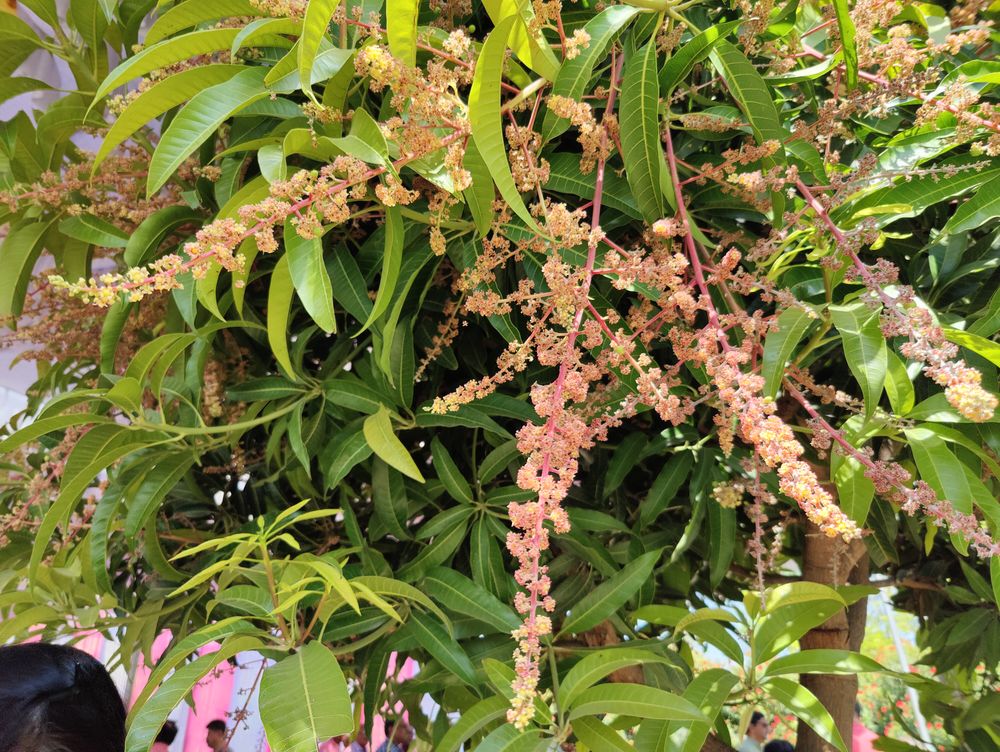
Flowering generally occurs in March, depending on region.
The flower buds that emerge in February–March are actually decided in October.
Hence, October is the most critical month for fertilizer application.
Water Management and Fruit Quality
Less irrigation results in better fruit taste.
After fruiting, new leaves emerge, which is a normal growth phase.
At this stage, root development must take place.
Better root development ensures better establishment and long-term productivity.
Nutrient Requirement
Mango needs very high potassium, especially after flowering.
Once flowering is over:
Spray potassium or
Apply NPK near the root zone
No fertilizer is required during the first year.
From the second year onwards:
Apply 700 g of NPK 19:19:19 per plant
Increase by 200 g per tree every year if the tree is growing well
Fertilizer application should be done once in October, whether the tree lies in the southwest or northeast monsoon track.
Importance of Phosphorus
Phosphorus is essential for root development, not only in mango but also in:
Seasonal plants
Vegetable transplants such as tomato, brinjal, chilli, and capsicum
If you do not want to use inorganic phosphorus, you can apply rock phosphate, which is:
Organic
Naturally occurring rock mineral
Planting and Early Care
Dig a 3 × 3 × 3 feet pit; never dig a small pit.
Never apply fertilizers at the time of planting—not for mango or any plant.
Even for banana, fertilizer application starts only from the third month, then fifth, then seventh.
If someone insists on fertilizer at planting, apply only phosphatic fertilizers:
DAP
Single Super Phosphate (SSP)
Triple Super Phosphate (TSP)
Phosphorus supports early root establishment.
Pruning
Pruning must be done in July, after harvesting.
By July–August, new shoots with a purplish tinge emerge.
That is the correct time for pruning.
Major Pests of Mango
Mango Hopper (Most Serious Pest)
Mango hopper is a very serious pest.
It appears only during flowering.
It remains hidden inside bark throughout the year and suddenly emerges during flowering.
Hopper causes hopper burn (flower burn):
Flowers dry and fall
Leaves remain green and healthy
When disturbed, hoppers suddenly fly and may hit your face, creating a metallic impact and heat sensation.
A healthy flower panicle should remain for 10–15 days.
Hopper infestation causes:
Sudden drying of flowers
Flower drop
Only bare flower stalks remain
Prophylactic spray is compulsory.
Powdery Mildew (Only Economically Important Disease)
Powdery mildew is the only disease that causes economic loss in mango.
Even with fantastic flowering, if you miss:
Wettable sulfur spray
Synthetic pyrethroid (fenvalerate or cypermethrin)
Then the entire flowering can become a 100% flop show.
Not even a single fruit may set.
Powdery mildew can destroy the crop within 5 days.
Diseases Not to Worry About
Leaf blight causes browning of leaves.
It does not cause economic loss.
Minor leaf spots and blights are common and should not create panic.
Other Important Pests
Stem borer:
Circular holes on the trunk indicate adult beetle emergence
The grub causes internal damage
Leaf webber (leaf folder / leaf pepper):
Leaf tips cluster together with webbing
Caused by caterpillars, not ants
Gall midge:
Causes characteristic deformities
Fruit fly:
Not a major issue in commercial farms due to sprays
Serious problem in home gardens
Eggs are laid inside fruits
Maggots grow during ripening, causing rot or exit holes
Flowering Timeline (India)
South India: January–February
North India: February–March
Far North: Late February to early March
Flower Induction (If Delayed)
Avoid chemical growth retardants.
Prefer natural methods:
Panchagavya
Fermented coconut milk
Buttermilk-based formulations
Fruit Drop
Fruit drop is natural and occurs twice:
Marble stage
Slightly larger stage
Check that each flower panicle retains at least 3–4 fruits.
- This helps assess whether the crop is successful.